
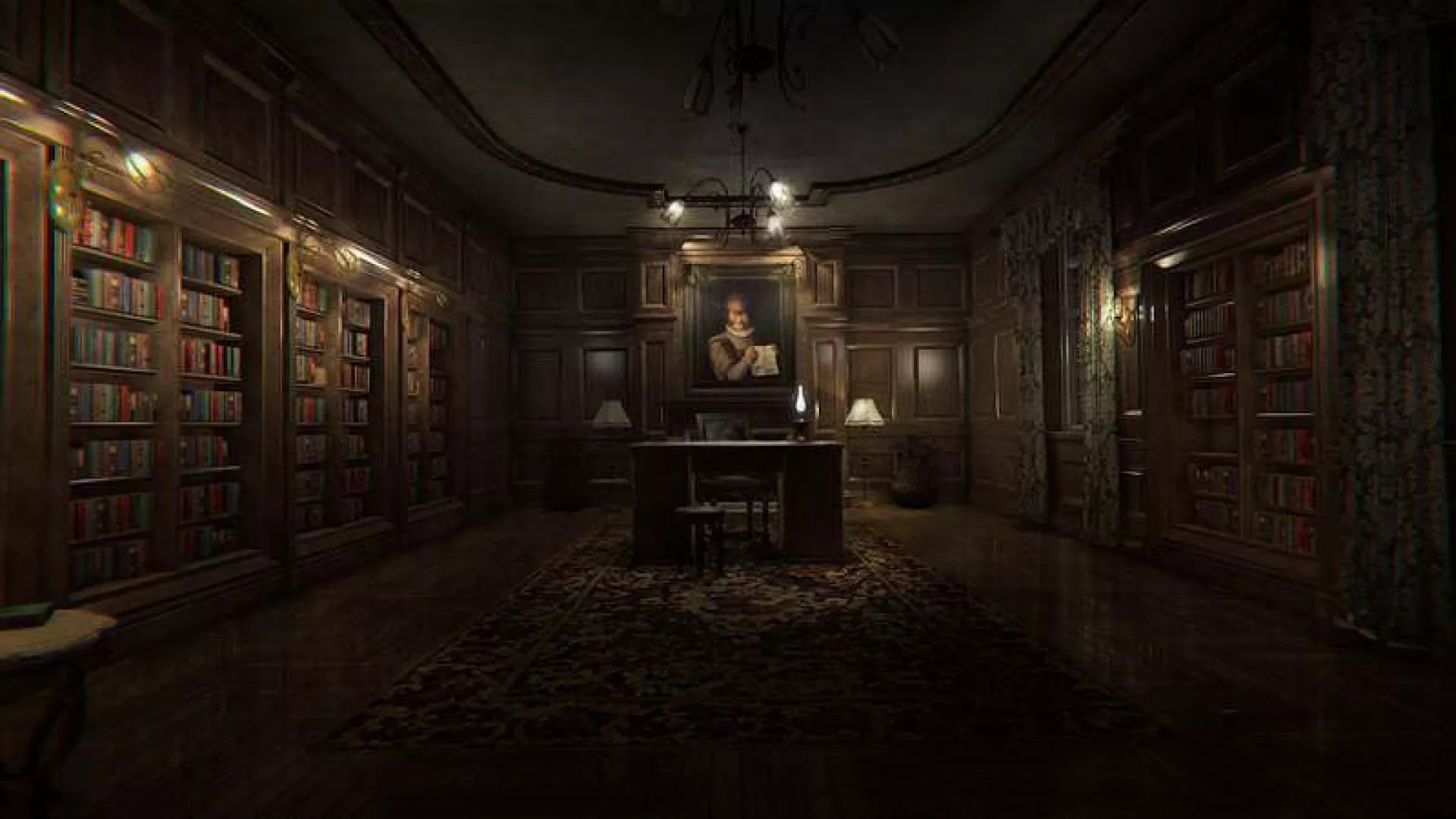
Pick your graphics card and you get the verdict and the FPS measured on this game. We remember your card for the next game you check.
What the studio publishes. The tags update with the card you picked above.
A pair like "RX 6700 XT / RTX 2080" means either of the two: the bar is set by the lower one.
If your setup runs it, this is the price: the best of 27 deals across 12 verified stores. Check all prices for Layers of Fear on all platforms →
Final prices with fees
Real benchmarks at High quality, no upscaling. Your card is highlighted in the table.
| Graphics card | 1080p | 1440p | 4K | Best at 60 FPS | Price from |
|---|---|---|---|---|---|
| RTX 4090 24 GB | 193–204 | 149–157 | 85–91 | 4K on High | — |
| RTX 4080 16 GB | 155–168 | 118–127 | 63–69 | 4K on High | — |
| AORUS RX 7900 XTX 24 GB | 155–167 | 111–121 | 61–68 | 4K on High | — |
| RTX 4070 Ti 12 GB | 136–145 | 93–104 | 49–56 | 1440p on High | — |
| RTX 3080 Ti 12 GB | 121–133 | 88–96 | 49–55 | 1440p on High | 1.619–2.746 €approx. |
| RTX 3080 12 GB | 117–129 | 85–93 | 47–53 | 1440p on High | — |
| RTX 3080 10 GB | 113–124 | 81–88 | 44–49 | 1440p on High | 1.243–1.579 €approx. |
| RTX 4070 12 GB | 114–122 | 77–86 | 37–43 | 1440p on High | — |
| RX 6950 XT 16 GB | 109–118 | 78–87 | 42–47 | 1440p on High | — |
| RX 6900 XT 16 GB | 101–109 | 72–80 | 38–42 | 1440p on High | 887–1.778 €approx. |
| RX 6800 XT 16 GB | 97–105 | 69–77 | 36–39 | 1440p on High | 895–1.118 €approx. |
| RTX 3070 Ti 8 GB | 93–100 | 65–72 | 33–37 | 1440p on High | 889–1.336 €approx. |
| RTX 2080 Ti 11 GB | 88–97 | 61–69 | 33–37 | 1440p on High | — |
| RTX 3070 8 GB | 89–95 | 61–68 | 31–34 | 1440p on High | 556–1.234 €approx. |
| RX 6800 16 GB | 87–94 | 61–68 | 31–34 | 1440p on High | — |
| RTX 3060 Ti 8 GB | 77–83 | 53–59 | 27–30 | 1080p on High | 427–957 €approx. |
| RTX 2080 SUPER 8 GB | 72–81 | 51–57 | 26–30 | 1080p on High | 1.096 €approx. |
| RX 6750 XT 12 GB | 70–78 | 49–55 | 24–27 | 1080p on High | — |
| RTX 2080 8 GB | 70–78 | 48–54 | 25–29 | 1080p on High | — |
| RTX 2070 SUPER 8 GB | 66–73 | 45–51 | 23–26 | 1080p on High | — |
| RX 6700 XT 12 GB | 65–72 | 45–50 | 22–25 | 1080p on High | 958 €approx. |
| RTX 3060 12 GB | 64–70 | 43–47 | 22–24 | 1080p on High | 433–732 €approx. |
| RX 6650 XT 8 GB | 59–65 | 39–43 | 19–21 | 1080p on High | — |
| RTX 2070 8 GB | 58–65 | 39–44 | 20–23 | 1080p on High | — |
| RX 6600 XT 8 GB | 56–62 | 37–41 | 18–20 | 1080p one step down | 625–785 €approx. |
| RTX 2060 SUPER 8 GB | 56–62 | 38–43 | 19–22 | 1080p one step down | 379 €approx. |
| RX 6600 8 GB | 50–55 | 31–35 | 15–17 | 1080p one step down | 447 €approx. |
← Swipe the table for the other columns →
Green 60+ · Amber 30–60 · Red below 30. All at High quality and with no upscaling.
Of the 27 cards tested, 24 clear 60 FPS at 1080p, 15 hold 60 at 1440p and only 3 keep them at 4K. What really decides whether you need a new card is the resolution you play at, not the game.
From High: to High +42% · to Medium +70% · to Low +117%
⚠️ Approximate: nobody has measured the preset ladder on Layers of Fear , so these are the median gains across the 20 games where it has been measured. The FPS in the tables above are measured on this game; only this step-down is borrowed.
One step yes, two no: coming down from High, not every card gains the same, and that spread is what widens the range in the calculator above. If your card sits ten or fifteen FPS short of 60, the first step gets you there; if you are thirty short, not even lowering everything gets you comfortable.
In a game the graphics card draws the frames and the processor prepares them. If the processor cannot prepare as many as the card could draw, your FPS stop at whatever the processor delivers no matter how good the card is: that is a bottleneck.
This table measures it by isolating the variable: every processor with the same card, an RTX 5090, so the limit you see is its own and not the card's. That figure is its ceiling: however good the card you pair it with, it goes no higher.
The second column turns that ceiling into the only thing you have to decide: how far up the range it is worth going. It is the fastest card — of those measured on this same game — that your processor still feeds. Go above it and the FPS stop rising: the processor sets them.
In practice: if the card you are thinking of buying sits below the one in your row, the money is well spent on the card. If it sits above, start with the processor.
⚠️ This holds at 1080p, which is how they were measured. At 1440p and 4K the card works harder, FPS drop and the processor stops calling the shots: the higher the resolution, the less this table matters.
| Processor | Ceiling at 1080p | How far up the range it pays off |
|---|---|---|
| Intel Core i9 13900K 4.3 GHz | 209–225 | Any |
| Intel Core i9 13700K 3.4 GHz | 199–214 | Any |
| Intel Core i9 12900K 3.2 GHz | 170–179 | up to a RTX 4080 16 GB |
| AMD Ryzen 9 7950X 4.5 GHz | 162–176 | up to a RTX 4080 16 GB |
| Intel Core i5 12600K 3.7 GHz | 161–170 | up to a RTX 4080 16 GB |
| AMD Ryzen 7 7700X 4.5 GHz | 159–172 | up to a RTX 4080 16 GB |
| AMD Ryzen 5 7600X 4.7 GHz | 156–169 | up to a RTX 4080 16 GB |
| Intel Core i5 13400 3.3 GHz | 155–163 | up to a RTX 4080 16 GB |
| Intel Core i9 11900K 3.5 GHz | 142–153 | up to a RTX 4070 Ti 12 GB |
| AMD Ryzen 9 5900X 3.7 GHz | 140–150 | up to a RTX 4070 Ti 12 GB |
| Intel Core i5 12400 2.4 GHz | 140–148 | up to a RTX 4070 Ti 12 GB |
| AMD Ryzen 7 5700X 3.4 GHz | 137–147 | up to a RTX 4070 Ti 12 GB |
| AMD Ryzen 5 5600X 3.7 GHz | 135–144 | up to a RTX 4070 Ti 12 GB |
| Intel Core i5 11600K 3.9 GHz | 133–144 | up to a RTX 4070 Ti 12 GB |
| Intel Core i3 13100 3.4 GHz | 133–143 | up to a RTX 4070 Ti 12 GB |
| Intel Core i9 10900K 3.7 GHz | 132–140 | up to a RTX 3080 Ti 12 GB |
| Intel Core i3 12100 3.3 GHz | 128–138 | up to a RTX 3080 Ti 12 GB |
| Intel Core i7 10700K 3.8 GHz | 126–136 | up to a RTX 3080 Ti 12 GB |
| Intel Core i5 10600K 4.1 GHz | 118–127 | up to a RTX 3080 Ti 12 GB |
| AMD Ryzen 9 3900X 3.8 GHz | 112–119 | up to a RTX 3080 10 GB |
| AMD Ryzen 7 3700X 3.6 GHz | 112–119 | up to a RTX 3080 10 GB |
| AMD Ryzen 5 3600X 3.8 GHz | 109–115 | up to a RX 6950 XT 16 GB |
| AMD Ryzen 3 3300 3.8 GHz | 100–106 | up to a RX 6900 XT 16 GB |
| Intel Core i3 10100 3.6 GHz | 100–106 | up to a RX 6900 XT 16 GB |
| AMD Ryzen 3 3100 3.6 GHz | 93–98 | up to a RTX 3070 Ti 8 GB |
← Swipe the table →
Of the 25 processors tested, 2 keep up with a RTX 4090 24 GB, which is the fastest card we have tested on this game. The rest are not "bad": it is that past a certain card they stop giving you more. So what matters is not a yes or a no, but where your ceiling sits — and unless you are coming from an eight-year-old quad core, on this game that ceiling is well above the card most people have installed.
Measured peak of 6,1 GB at 1080p. With 8 GB you have room; with 6 GB you are tight.
Measured from 1 to 12 cores. The jump is between 4 and 6; past 8 it barely changes.
With a 6,1 GB peak, Layers of Fear fits comfortably on any 8 GB card and runs tight on 6 GB ones. And it uses up to 12 cores: a modern processor with that many is as well served as a sixteen-core one.
The newest releases with measured FPS. Your card stays selected.
They render the game at a lower resolution and rebuild the image. It is the single biggest gain there is, and the only one that does not force you to lower graphics quality.
In Quality mode. The best-looking of the three. At 4K the gain is bigger; at 1080p, smaller and with more loss of sharpness.
The universal option. A step behind DLSS in image quality, mostly on moving foliage, but it works on cards where DLSS does not exist.
Performs best on Arc, where it uses dedicated units. It works on NVIDIA and AMD, but FSR is usually the better pick there.
The tables above are all without upscaling, so these gains add on top of them.
Upscaling is the only lever that gives you FPS without touching visual quality, and that is why it is the first one to try: before turning shadows down, switch DLSS or FSR to Quality mode. The rule is simple: the higher the resolution, the more it gives and the less you notice it. At 4K it can save your session; at 1080p it gains little and the image loses sharpness.
Almost everything above is free and done once: Resizable BAR and Smart Access Memory ship disabled on many boards and are free FPS. If you own an Arc, updating the driver is literally the best investment you can make without spending a cent.
Only cards measured on this game that average 60 FPS at 1080p, cheapest first. A card that cannot move Layers of Fear has no place on this list.
1080p High, measured.
1080p High, measured.
1080p High, measured.
Stutter in the first few minutes after updating the game or the drivers is normal. It sorts itself out.
Steam, Discord and GeForce Experience overlays cause micro-stutter.
The studio lists it as required. On a mechanical drive, stutter while areas load is not fixed by any setting.
With a NVIDIA GeForce GTX 560 1GB / Radeon R7 250X 1GB and 4 GB of RAM you are in. Minimum specs are exactly that: the setup where the game starts and is playable, usually at 1080p with quality turned down — not the one that gives you a comfortable experience. The full table is above.
The minimum guarantees the game works; the recommended one, that it looks and moves the way the studio designed it, around 60 FPS at 1080p on high quality. If you land between the two, the game runs: you will have to turn a setting down.
At 1080p on the highest quality, the most modest one that reaches 60 of all we have tested is a RTX 2070 8 GB. To hold that at 1440p you need to step up to a RX 6800 16 GB. And at 4K, a AORUS RX 7900 XTX 24 GB. Drop one quality step and any of those figures eases off.
114–122 FPS at 1080p on the highest quality. At 1440p, 77–86. At 4K, 37–43. That is a real measurement with that same card, not a calculation. For any other, use the calculator at the top.
The calculator places it between the two nearest measured cards and gives you the range it falls into on Layers of Fear . You will not see an invented exact number: you will see between which values it sits and whether it is enough. If your card falls outside everything tested, we say so rather than making a figure up.
It depends on the game, and Layers of Fear is no exception. 30 is the playable floor in a slow-paced game, and you can feel it is tight. 60 is the sensible target: the image responds and does not tire you out. Past 120 it only pays off with a monitor faster than 60 Hz. And steadiness matters more than the average: a constant 50 FPS plays better than swinging between 40 and 90.
The game asks for 4 GB of RAM. On video memory, the peak measured at 1080p is 6,1 GB: with an 8 GB card you have room, with a 6 GB one you are tight, especially if you push textures. Being short on RAM does not lower your average FPS so much as it causes stutter while areas load.
Of the 25 tested, 2 keep up with the fastest card we have measured. In this game the processor is rarely the brake from a recent generation onwards. Pick yours in the calculator and we tell you, with your specific card, whether it caps you and by how much.
Dropping to High gives +42%, Dropping to Medium gives +70%, Dropping to Low gives +117%. As a rule, the first step is the one that pays off most: it gets you close to 60 with barely any visible change. If you are thirty FPS short, not even lowering everything gets you comfortable — the problem is somewhere else.
Between 20% and 35% more, depending on mode and resolution, without touching graphics quality: it is the first lever to try, before turning shadows down. The higher the resolution, the more it gives and the less you notice it; at 1080p it gains little and the image loses some sharpness.
We compare 27 deals across 12 verified stores and take you to the cheapest of the day. See all Layers of Fear deals →
Choose which cookies we may use. Turning a category off deletes the cookies we can reach from your browser.
Some cookies are set by third parties on their own domains and can only be removed from your browser settings or through each provider's own opt-out.






 Italiano
 English
 Español
 Português
 Deutsch
 Français
 Copied!